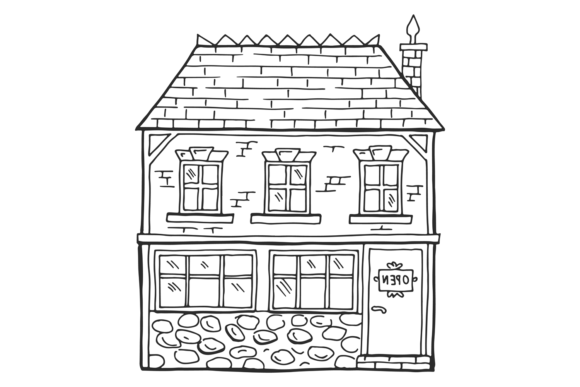
Retro House with Tiled Roof. Old Buildin
As someone who has spent years turning digital files into tangible, stitched treasures, I know that the difference between a good design and a great finished product often comes down to the source material. Today, I am looking at Retro House with Tiled Roof. Old Buildin, an illustration categorized under Graphics and Illustrations. At first glance, it promises a nostalgic charm that fits perfectly into the current trend of cozy, vintage-inspired home decor and apparel. But does it hold up when transferred from a screen to a needle? Let's dive into how this specific design performs in real-world embroidery scenarios.
The First Stitch: Visual Personality and Mood
The moment you open the file for Retro House with Tiled Roof. Old Buildin, the mood is immediately established. It isn't just a generic building; it carries the weight of history and the warmth of a bygone era. The "Old Building" aspect suggests character, while the tiled roof provides a natural texture that translates beautifully into stitch work. For a designer, this is a goldmine because it offers a focal point that doesn't require complex lettering or busy backgrounds to make a statement.
The doodle style implies a hand-drawn quality, which can be tricky in machine embroidery. If the lines are too thin or the details too intricate, the stitching might blur together. However, the isolated nature of the graphic on a white background gives us clean edges to work with. This is crucial for creating crisp satin stitches around the perimeter of the house. The visual personality here is inviting and approachable, making it ideal for projects that need to feel personal rather than corporate.
Real-World Application: From Digital File to Finished Product
Let's imagine a practical scenario. You are an Etsy seller preparing inventory for the upcoming holiday season. You decide to create a line of custom embroidered aprons featuring your shop's signature aesthetic. You pull Retro House with Tiled Roof. Old Buildin into your digitizing software. This design screams "kitchen" and "home." Imagine placing it on a heavy cotton canvas apron with a warm terracotta thread for the roof tiles and a soft sage green for the walls. The result would be a stunning centerpiece that tells a story about heritage and craftsmanship.
This same design works exceptionally well for baby items. A small version of the retro house could be stitched onto a onesie or a nursery wall hanging. Parents love personalized gifts that evoke nostalgia, and the simple geometry of the house ensures it remains legible even on small fabrics like a baby hat or a bib. Furthermore, for craft business owners, this image serves as a versatile asset. Whether you are creating patches for denim jackets, decorating tote bags for local markets, or adding a touch of whimsy to pillow covers, the design adapts to various scales without losing its impact.
I also see significant potential in commercial embroidery projects for boutique branding. A coffee shop or a bed-and-breakfast could use this motif on their staff uniforms or guest amenities. The "retro" vibe aligns perfectly with modern interior design trends, making it a safe yet stylish choice for businesses wanting to project a curated, vintage atmosphere. When used correctly, Retro House with Tiled Roof. Old Buildin elevates a standard item into a branded experience that customers want to photograph and share.
Navigating Technical Challenges
While the concept is strong, every designer knows that execution is everything. There are specific areas where Retro House with Tiled Roof. Old Buildin requires careful consideration before hitting the start button on your machine. One of the primary concerns is the detail level. If the original illustration contains very fine lines for the window panes or the individual shingles on the roof, these might not translate well if the design is scaled down too much.
For small hoop sizes, such as those used for caps or hats, the curved surface can distort straight lines. The roofline of the house might look uneven if the fabric stretches during stitching. In these cases, simplifying the fill stitch density is essential. If you attempt to stitch every single tile in high resolution on a cap, the fabric will pucker, and the design will lose its definition. Instead, consider using a running stitch for the finer details or grouping the tiles into larger blocks of color to maintain clarity.
Textured fabrics present another hurdle. Embroidery relies on tension to create a smooth finish. If you place this design on a heavily textured bouclé or a loose-weave linen, the stitches may sink into the fabric, obscuring the clean lines of the house. Similarly, stretchy fabrics like jersey knits require a stabilizer that matches the stretch of the garment. Without the right support, the "Old Building" structure might wobble or warp after washing.
Design Notes for the Practical Maker
To ensure your finished product looks professional, there are several steps you must take before starting a production run. First and foremost, always test the design on scrap fabric that mimics your final project material. This allows you to check thread color contrast and see how the stitch density interacts with the weave of the cloth. A light gray house on a white shirt might disappear, whereas a dark charcoal on navy would pop.
Review the stitch types carefully. The roof tiles might benefit from a combination of satin stitch for the outline and fill stitch for the body, but you need to verify that the machine can handle the angle changes without breaking needles or threads. Inspect the small details in the windows and doors; if they are too tiny, they may become solid blobs of thread. It is often better to simplify these elements slightly to ensure they remain recognizable in the final product.
Don't forget to test the design in black and white mockups. Sometimes colors hide structural flaws that are obvious in grayscale. If the design looks unbalanced in monochrome, it will likely struggle in full color. Additionally, confirm whether the file format (EPS, JPG, SVG, PNG) you have purchased supports the specific needs of your embroidery machine. While the description mentions these formats, you must ensure the vector data is clean and ready for digitization if you plan to edit the shape yourself.
Licensing is another critical factor for small shop products and digital sellers. Before selling finished items featuring Retro House with Tiled Roof. Old Buildin, double-check the terms of use. Some graphics allow for unlimited commercial use, while others restrict the number of items you can produce. Ignoring these terms can lead to legal issues down the road.
Final Verdict on Visual Appeal and Value
In conclusion, Retro House with Tiled Roof. Old Buildin is a compelling choice for designers seeking to add a touch of vintage charm to their portfolio. Its strength lies in its simplicity and the emotional connection it creates with viewers. When executed with proper technique—using the right stabilizer, appropriate thread colors, and adjusted stitch density—it transforms from a simple doodle into a high-value handmade product.
Whether you are crafting a personalized gift for a loved one or building a brand identity for a boutique, this design offers versatility and timeless appeal. It reminds us that sometimes the best designs aren't the most complex ones, but the ones that tell a story through every single stitch. By treating the file with respect and understanding its limitations, you can create embroidery projects that stand out in a crowded market and bring joy to anyone who wears or owns them.