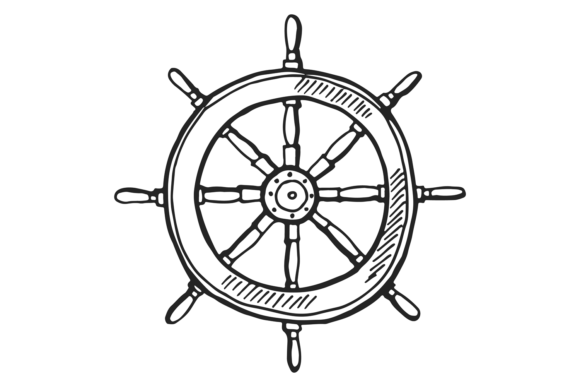
Ship Wheel Sketch. Retro Steering Marine Review
I have stitched thousands of designs over the years, ranging from simple monograms to complex pictorial scenes. When I first pulled up Ship Wheel Sketch. Retro Steering Marine, my immediate reaction was one of classic nautical charm. It is not just another clip art image; it feels like a vintage engraving waiting to be translated into thread. As an experienced designer who frequently evaluates files for real-world client projects and my own handmade shop, I look for more than just visual appeal. I need to know how the design will behave under the needle, how it translates to different fabrics, and whether it adds genuine value to a finished product.
This particular piece falls under the Illustrations and Graphics categories, but its true potential lies in its application as a machine embroidery design. The sketch style offers a distinct advantage: it breaks down complex shapes into manageable lines that often stitch beautifully without requiring excessive fill density. Before I commit this file to a custom order or a batch of Etsy listings, I had to run through a mental checklist of practical considerations. Here is my honest take on where Ship Wheel Sketch. Retro Steering Marine shines and where you might want to proceed with caution.
The First Impression: Mood and Visual Personality
The moment you see Ship Wheel Sketch. Retro Steering Marine, you are transported to a coastal dock or a captain's quarters. The retro steering marine symbol evokes a sense of adventure, tradition, and reliability. Unlike modern, flat vector icons that can feel sterile when embroidered, this sketch style has texture and character built right in. The lines vary in thickness, mimicking the look of a hand-drawn etching. This is crucial for embroidery because it allows the thread to follow the natural flow of the design rather than fighting against rigid geometric blocks.
For a creative entrepreneur or an Etsy seller, this mood is gold. It fits perfectly with brands that focus on outdoor gear, maritime apparel, or rustic home decor. The isolated nature of the design means it stands out clearly against almost any background, making it incredibly versatile for digital mockups and printable previews. Whether you are selling a personalized gift or creating boutique branding, this design communicates quality and attention to detail immediately.
Real-World Application: Where This Design Fits Best
In my experience, the best way to judge an embroidery file is to imagine it on a specific product. Let's say I am preparing a custom embroidered tote bag for a local craft fair. I would choose Ship Wheel Sketch. Retro Steering Marine for a canvas tote in a deep navy or charcoal color. The contrast between the white (or light) sketch lines and the dark fabric would create a striking focal point. Because the design relies on outlines rather than massive fill areas, it prevents the heavy "stiff" feel that often ruins the drape of a tote bag.
Similarly, this design excels on sweatshirts and hoodies. Imagine a crewneck sweatshirt in heather gray with the ship wheel centered on the chest. The retro aesthetic pairs well with streetwear trends, appealing to a demographic that appreciates vintage vibes. For baby items, such as a onesie or a burp cloth, the design is gentle enough not to overwhelm the small scale, yet detailed enough to look professional. I also envision this working beautifully as an embroidered patch for denim jackets or aprons, adding a touch of personality to workwear.
When thinking about holiday gifts or wedding favors, Ship Wheel Sketch. Retro Steering Marine offers a unique angle. It works wonderfully for nautical-themed weddings or as a keepsake for sailors and fishing enthusiasts. The design is timeless, meaning it won't look dated next year. For small business owners, this is a safe bet for merchandise that needs to appeal to a broad audience while maintaining a cohesive brand identity.
Practical Stitching Challenges and Limitations
However, every designer knows that what looks good on a screen does not always translate perfectly to fabric. There are specific scenarios where Ship Wheel Sketch. Retro Steering Marine requires careful handling. If you are working with a very small hoop size, such as those used for hat cuffs or delicate jewelry tags, the fine lines of the sketch might get lost or merge together. In these cases, the intricate details could become muddy, reducing the clarity of the final product.
Fabric choice is another critical factor. On textured fabrics like terry cloth or heavy boucle, the definition of the sketch lines may be obscured. Similarly, stretchy knits require a high-quality stabilizer to prevent the design from distorting during the stitching process. If you are using thin fabric, the density of the stitches could cause puckering, which detracts from the professional finish. Dark fabrics present their own challenge; if the design file is intended to be stitched in white thread on black material, ensure your underlay settings are robust enough to cover the base color effectively.
Curved surfaces, like baseball caps, can be tricky with sketch-style designs. The perspective distortion on a curved brim or crown might alter the proportions of the wheel, making it look slightly off-center or squashed. While this can sometimes add character, it requires precise digitizing adjustments to ensure the design remains symmetrical and balanced. Additionally, products that undergo frequent washing, such as kitchen towels or aprons, need to be tested for thread retention. While the sketch style generally holds up well, loose running stitches in the outer rim might snag if the tension is not set correctly.
Design Notes for the Professional Embroiderer
To get the most out of Ship Wheel Sketch. Retro Steering Marine, I strongly advise testing the design on scrap fabric before committing to a customer order. This step allows you to verify the thread color contrast and inspect how the stitch density interacts with your specific fabric type. Always review the stitch count and confirm the recommended hoop size provided by the file creator. If the design includes tiny lettering or extremely fine corners, consider simplifying the digitizing or adjusting the scale to ensure these elements remain legible after stitching.
When setting up your machine, pay close attention to the stabilizer. A cut-away stabilizer is often the best choice for maintaining the shape of a detailed sketch on woven fabrics, while a tear-away might suffice for stable knits. Check whether the design works for both personal and commercial projects by reviewing the licensing terms included with the file. Many sellers assume they can resell digital assets, but this is rarely the case unless explicitly stated. Confirming the license ensures you avoid legal issues when selling finished items or offering digital product previews.
Finally, compare your test runs in both black and white mockups and on actual fabric backgrounds. Sometimes a design looks perfect in a digital preview but loses impact once the texture of the thread is introduced. By taking these precautions, you ensure that the Ship Wheel Sketch. Retro Steering Marine design elevates your product rather than diminishing it. Whether you are a hobbyist making a personalized gift or a seasoned Etsy seller building a catalog, this design asset offers a solid foundation for creating high-quality, visually appealing embroidery projects.